
Part 4 - Plates, Plate Packaging and the 5 Rs
Here at DuPont™ Cyrel® Solutions, we think flexo plates are remarkable examples of precision engineering (and yes, we realize we are a little biased…). Consider, for instance, the flatness of a full-sized 50” x 80”, 0.067” (1.70 mm) thick Cyrel® plate. The thickness of this plate will vary by no more than 0.001” (25.4 μm) from the thickest to the thinnest area.
To help visualize this, imagine being able to wave a magic wand and make that same 50” x 80” Cyrel® plate expand by a factor of 1000 in all dimensions. The plate would now cover about 1 square mile (2.6 sq. km) of land. An area this big could fit roughly 484 US football fields, or 362 soccer pitches. Amazingly, the elevation change over that square mile would be no more than 1 inch (25.4 mm)! “Flat as a pancake” has long been the analogy used to describe something extremely flat, but maybe “flat as a flexo plate” is more fitting.
As impressive as this may be, even more important than plates being manufactured with exceptional and consistent flatness – as well as other critical properties – is that they arrive at the customer the same way. For this reason, the packaging and various components used to protect plates during shipping and storage are extremely critical in preserving the integrity of each individual plate. Add to this the waste generated by the platemaking process (ex. solvent still bottoms), and the user finds themselves with a variety of materials that need to be disposed.
All these materials used in or required for the flexo platemaking process can be grouped into 3 main categories:
- Internal Packaging – raw plates, foam interleaves, etc.
- External Packaging – plate boxes, woodies, etc.
- Platemaking – solvent still bottoms, spent UV exposure bulbs, etc.
Internal Packaging
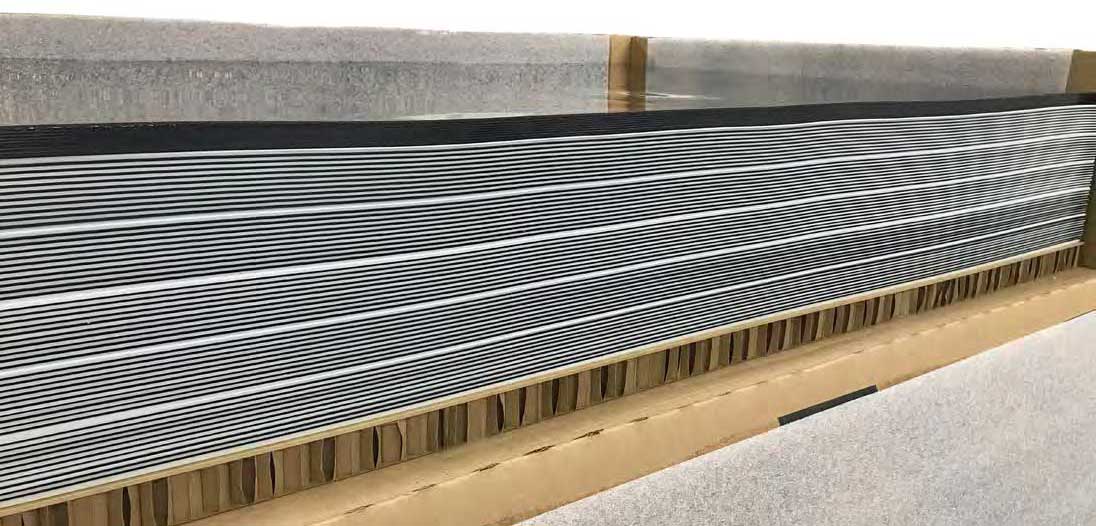
To the casual observer, the amount and types of materials used to protect raw Cyrel® plates perhaps seems like overkill. But most people probably don’t realize the critical role that flexo plates play in the flexo printing process. A scratch, indentation, etc. in a single plate affects not just one printed package on the shelf, but ALL the packages printed with that plate! Finding out too late that a plate had a defect can be a very costly mistake – one that gets more expensive the closer to the store shelf it becomes discovered. For this reason, raw plates are interleaved with a protective layer of foam and various types of support boards to ensure that they remain protected, flat, and cushioned inside of their external packaging.
Furthermore, these materials are carefully selected to allow plates to acclimate to ambient conditions directly after manufacturing. The extrusion process used for producing raw photopolymer plates requires heating the ingredients to a temperature at which they will flow, like a thick syrup. Upon cooling, they return to a solid, but soft and impressionable state. Most of the cooling process happens before the plates are packed, but some residual cooling occurs while inside the external packaging. Here is where the protective internal packaging components help by allowing this process to happen in a way that maintains the plates’ flatness and thickness properties.
External Packaging
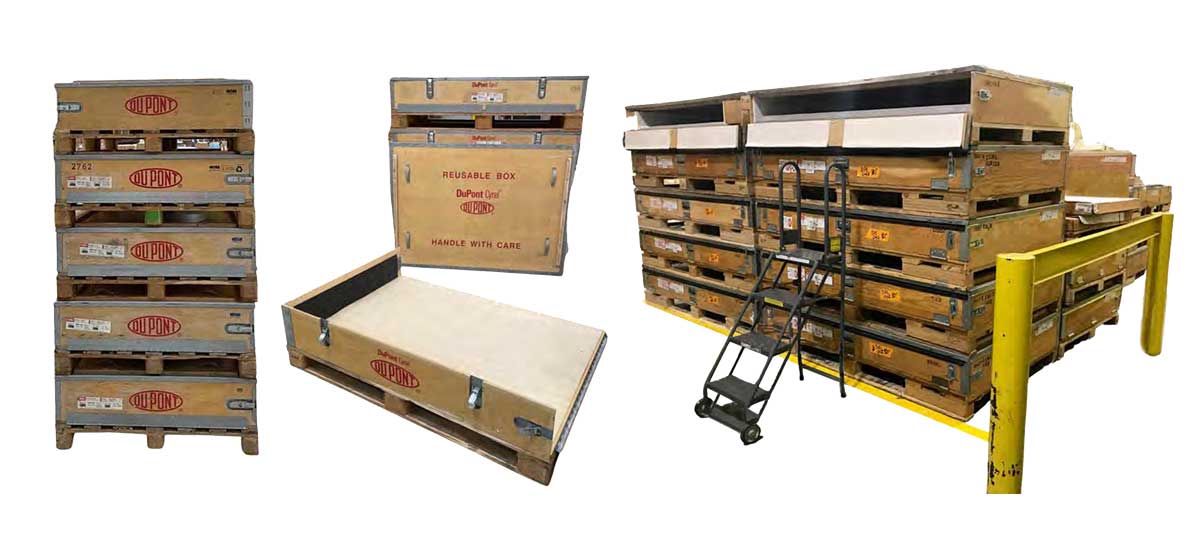
DuPont offers Cyrel® plates packaged in three different ways to accommodate the different volume and handling requirements of users:
- Boxes – Standard packaging for plates of all thicknesses and formats. Easy to handle. Shipped on pallets. Up to 20 plates per box (determined by thickness and format).
- Woodies – Used for larger format plates where high volume consumption is required. Intended for return and reuse pallet. Up to 50 plates per Woodie (determined by thickness and format).
- Corrugated Bulk Boxes (CBB) – Similar to woodies, but one time use only. Integrated pallet. Up to 70 plates per CBB (determined by thickness and format).
Much like internal packaging, external packaging is carefully engineered and selected for its ability to protect plates from the rigors of shipping and transport, while keeping the integrity of the plates intact. Boxes make the most sense for low volume users, small format users, and those that use multiple plate types. Woodies and CBBs are typically a better fit for high volume operations where only a few plate types are required.
Platemaking
The process of making and using finished flexo plates produces several materials and items that need to be disposed of after use.
- With solvent platemaking, the process of distilling and reclaiming the washout solvent yields drums of “still bottoms”, which is comprised of raw plate components, some residual washout solvent, and often a surrogate oil to keep the mixture from solidifying.
- DuPont™ Cyrel® FAST platemaking results in spent nonwoven rolls.
- Several steps of the platemaking process require exposure with UV light. The fluorescent UV tubes typically used for this have a lifespan and need to be replaced periodically.
- Finished flexo plate trim waste and the plates themselves will need to be replaced due to wear, damage, or obsolescence.

Responsible Stewardship
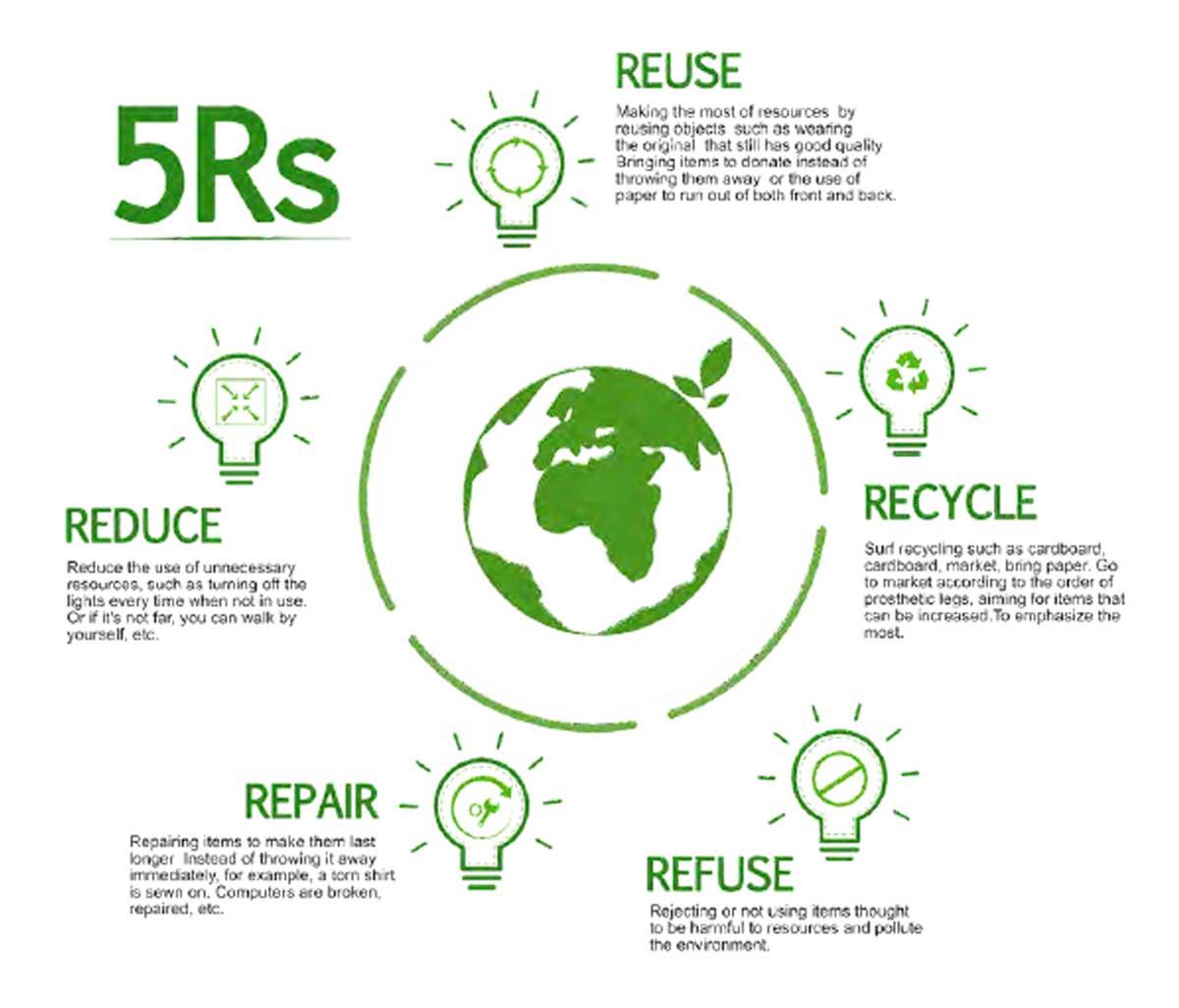
Through committed use of the “5 Rs” – Reducing, Reusing, Recycling, Returning, and Recovering – the manufacturing process of DuPont™ Cyrel® plates is maintained as a zero waste to landfill operation. Non-reusable and nonrecyclable manufacturing waste is converted to engineered fuel as a replacement for fossil fuels in other manufacturing processes. Similar user waste obtained through our Cyrel® Return Programs is also included in this energy recovery solution.
We are dedicated to helping our customers achieve their own sustainability goals by providing guidance, products, and programs to eliminate landfill disposal of all materials required for the Cyrel® flexo platemaking process. As a handy guide for the Cyrel® user, the following chart summarizes DuPont’s recommendations for each component involved. Please contact your DuPont™ Cyrel® Sales Representative for further information, to learn more about Cyrel® Return Programs, or for help with addressing your particular needs. We are happy support you in your pursuit of sustainability in the plateroom!
Recommended DuPont Cyrel® Plate, Plate Packaging, and Platemaking Waste Practices
| Item | Reduce | Reuse | Recycle | Return | Recover | |
|---|---|---|---|---|---|---|
 | Raw DuPont™ Cyrel® Plates | 1) Use thinner plates 2) Optimize trim waste 3) Handle with care | Local Waste-to-Energy | |||
| Coversheets (Polyester) | Internal or local recycler | |||||
| Foam Interleaves | Use to protect finished plates in storage | DuPont™ Cyrel® Return Program (US & Canada) | Local Waste-to-Energy | |||
| Plastic Boards (Polystyrene) | Use to protect finished plates in storage | DuPont™ Cyrel® Return Program (US & Canada) | Local Waste-to-Energy | |||
| Foam Core Boards | Use to protect finished plates in storage | Local Waste-to-Energy | ||||
| Cardboard | Internal or local recycler | |||||
| Single & Double Wall Board | Internal or local recycler | |||||
 | DuPont™ Cyrel® Plate Boxes | Consider bulk packaging (CBBs or Woodies) | Internal or local recycler | DuPont™ Cyrel® Return Program (US & Canada) | ||
| DuPont™ Cyrel® Corrugated Bulk Boxes (CBB) | Internal or local recycler | DuPont™ Cyrel® Return Program (US & Canada) | ||||
| DuPont™ Cyrel® Woodies | DuPont™ Cyrel® Return Program (US & Canada) | |||||
| Pallets | Optimize orders (more boxes per shipment) | Internal or local reuse | Internal or local recycler | DuPont™ Cyrel® Return Program (US & Canada) | ||
 | DuPont™ Cyrel® Finished Plates (trimmings, worn plates, etc.) | Local Waste-to-Energy | ||||
| Sovent Still Bottoms | 1) Use shallow relief 2) Optimize reclaim efficiency | Local Waste-to-Energy | ||||
| Spent DuPont™ Cyrel® FAST Developer Rolls | Utilize full roll width in platemaking | DuPont™ Cyrel® Return Program (US & Canada) | Local Waste-to-Energy | |||
| Spent UV Exposure Bulbs | Internal or local recylcler |
The Sustainable Platemaker Series
Part 1 - Next Generation Plate Making and the Pursuit of Green
Part 2 - Plate considerations when working with sustainable inks and substrates
Part 3 - Changing the mindset: thinner flexo plates deliver quality and sustainability to the corrugated market
Part 4 - Plates, Plate Packaging and the 5 Rs
Part 5 - Reducing Plate Waste
Part 6 - Plateroom Habits that Affect Sustainability
Part 7 - Improving Plate Longevity and Reuse
Part 8 - Driving Pressroom Sustainability with Prepress Innovation