
Part 1 - Next Generation Plate Making and the Pursuit of Green
The two most talked about topics right now in the flexo industry are sustainability and labor shortages. As we look at the future of flexographic plate making, we must be sure to have solutions for these topics as a priority. DuPont™ Cyrel® has been on the leading edge of innovation for flexography since its first photopolymer plate in 1974 and is committed to continue innovating into the future. Let’s take a look at plate making innovations available today as well as what’s to come in the future that will be green as well as help with labor shortages.
DuPont launched the first Cyrel® FAST thermal plate processor in 2000, which was the first solvent free processor in the world. Thermal plate processing uses heat to melt unexposed polymer and then absorbs it into a nonwoven material for disposal. Solvent plate processing uses solvents and brushes to wash away unexposed polymer.
Solvent washout has been a tried-and-true method to process photopolymer plates, however it comes with a cost to the environment. Thermal plate making not only reduces the time to make a plate drastically but also has a smaller environmental footprint compared to solvent plate making as seen in figure A. The latest generation DuPont™ Cyrel® FAST processors, 2000TD and 3000TD, have further reduced the VOCs emission by 99.7% compared to solvent plate making systems. These thermal processors create a greener plate making process while still producing high quality plates that can be used in most flexographic applications.
Photopolymer plates use high intensity UV lights to expose and cross link the polymer which forms the image area to carry ink. Traditionally these UV lights have been fluorescent tubes also known as bank exposures. The world has seen fluorescent and incandescent light bulbs be replaced by LED diodes in the past few years. Everywhere you look there are LEDs being used to light something up, and we are even seeing this in the graphic arts industry. UV inks are now being cured via LEDs instead of fluorescent tubes. Now we have plate exposure units that use LED diodes instead of tubes, which bring many benefits to the plate and environment as seen below:

Environmental Footprint
- Up to 53% less greenhouse gas emissions vs solvent
- Up to 63% reduction in nonrenewable energy consumption vs solvent*
- Practically no VOC emissions
- Compliance with the increasing requirements of environmental legislation
- Safer, low-emission work environment
- Energy efficient (no distillation & drying)
- Cyrel® system eliminates solvents from platemaking
- Consistency – LED diodes have consistent output across the unit, from unit to unit and day to day. Consistency is the key to quality plate making for flexography.
- Dot Formation – High intensity UV output creates a flat top dot with a nice shoulder structure to hold fine features on plate. This results in very high-quality print from highlights to shadows.
- Sustainable – LEDs will last over 10x the life of fluorescent tubes and are easily disposed of while tubes contain mercury which requires special disposal.
Bank Exposure System

LED Exposure System

DuPont sees LEDs as the future for exposing photopolymer plates and that is why we released the Lightning plate family in 2021. This family of plates has a photopolymer chemistry specifically designed for LED exposure systems to achieve the highest quality plate and highest productivity possible. Read the white paper for more information
With the entire world struggling to hire and retain skilled labors, we must look for ways to continue production. Some believe that automation is an answer to help with this issue. Instead of having someone present in a production environment to move a product between equipment, why not have equipment move it for you? We have seen automation become common in prepress, plate mounting and on press. The typical flexographic plate making process has 14 human touch points required as seen in Figure B.
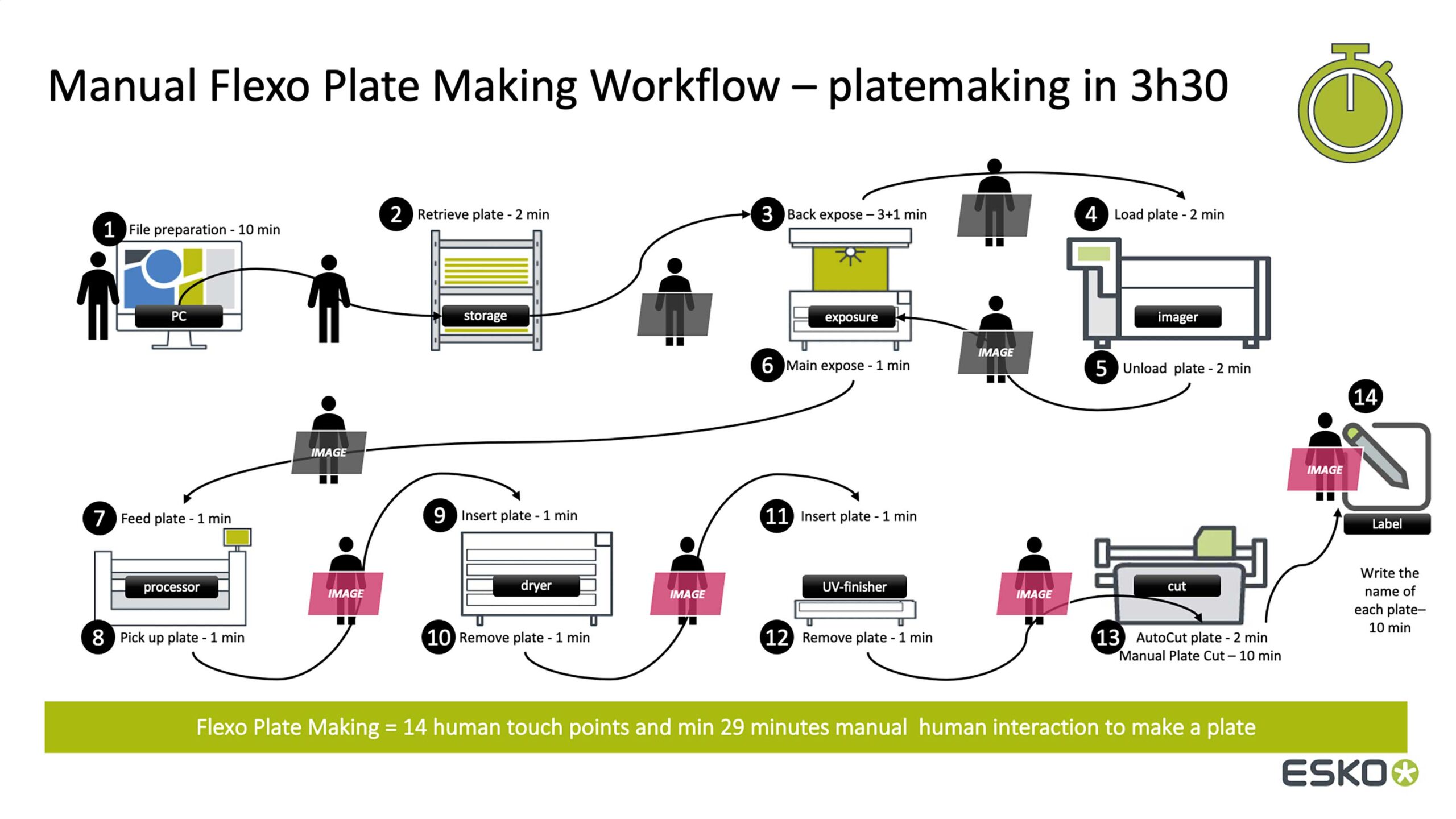
If we can automate this process and reduce or eliminate the human touch points, then it would reduce the need for skilled laborers to do this job.
For many years we have provided solvent in-liners for plate making which combine the processing, drying and light finishing into one automated system. Now there are systems that combine the imaging and exposing steps into an automated system with a robotic arm that carries the plate from imaging to exposing.
This has introduced the possibility to now combine all the steps of plate making into a single automated process. Over the coming years, you will see advancements in the flexo platemaking process that reduces these human touch points with the ultimate goal of a single touch point - removing the finished plate
With thermal plate processing, LED plate exposures, and automated plate making systems, productivity is a huge benefit. DuPont wants our customers to produce plates as quickly as possible while reducing waste and remakes. This not only is profitable for our customers but also environmentally sustainable. Sustainability is at the center of everything we do at DuPont™ Cyrel®.
To learn more about our commitment to sustainability and read our life cycle assessment. As you can see it’s an exciting time to be in flexography with many innovations here or just on the horizon that will make our industry more sustainable and assist with the labor shortage.

Visit cyrel.com for more information
The Sustainable Platemaker Series
Part 1 - Next Generation Plate Making and the Pursuit of Green
Part 2 - Plate considerations when working with sustainable inks and substrates
Part 3 - Changing the mindset: thinner flexo plates deliver quality and sustainability to the corrugated market
Part 4 - Plates, Plate Packaging and the 5 Rs
Part 5 - Reducing Plate Waste
Part 6 - Plateroom Habits that Affect Sustainability
Part 7 - Improving Plate Longevity and Reuse
Part 8 - Driving Pressroom Sustainability with Prepress Innovation