
Part 2 - Plate considerations when working with sustainable inks and substrates
Sustainable substrate trends
Driven by consumer interest and increased sustainability initiatives of brand owners, today’s flexo printers are being challenged with new, unfamiliar substrates, or may find themselves printing with water-based inks for the first time. For instance, trends in paper substrates involve moving to materials with higher recycled content and moving to lower grade papers to save on overall cost – both of which present printing challenges. Paper cost and quality is related to weight, mechanical strength, whiteness, and surface smoothness. Less expensive papers have generally rougher surfaces with higher mottle and can cause lower print quality as you see in the image below.
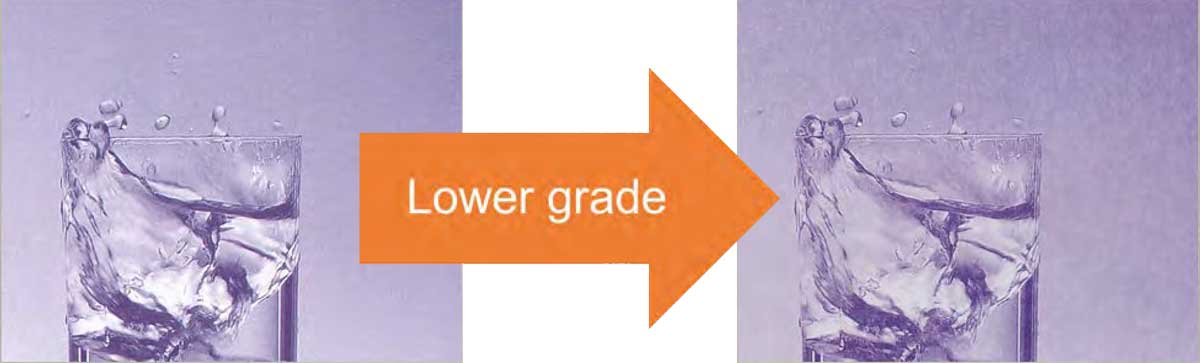
Plate considerations for sustainable substrates and water-based ink
In the past, the traditional answer to printing on paper substrates was to simply print with a lower durometer, “general purpose” plate, and not much more thought went into the decision. On higher quality substrates or less critical graphics, the result is usually sufficient, but lower grade substrates present additional challenges:
- Achieving enough print impression for good solids coverage without increasing dot gain;
- Higher potential for dust and loose fibers to be present and to collect on the plate, creating print defects;
- Changes in dot gain during a job due to plate wear from substrate friction; Plate receptivity to water-based ink and ability to release cleanly;
Taking note of these specific challenges, DuPont developed the Cyrel® EASY ESM, a flat top, thin, medium durometer flexo plate material. The main goal of the Cyrel® ESM is to help the printer to improve print quality and plate longevity when printing on lower quality papers with water-based ink in folding carton, corrugated pre-print, envelope, and other paper-based flexo applications. Being inherently flat top, EASY plates do not require special exposure techniques or consumables to create flat top dots. The features of Cyrel® ESM that enable this are:
- The flat top dot structure of Cyrel®ESM resists wears and enables long runs with stable dot gain;
- The durometer of Cyrel® ESM is perfectly balanced - soft enough to achieve excellent solid coverage, but hard enough for printing the finest highlights, even at fast press speeds;
- The ink receptance and release properties of Cyrel® ESM delivers clean printing and efficient transfer with minimal impression;
Here we have 3 examples of paper printed with a competitive plate vs the DuPont™ Cyrel® ESM plate.
| Printing Plate | Competitor A | Competitor A | Cyrel® ESM |
|---|---|---|---|
| Paper Quality | + Coated Test Liner | - Uncoated kraft liner | - Uncoated Kraft liner |
| Paper Cost | $$$ | $ | $ |
| Mottle | + | - | + |
| Print Results | 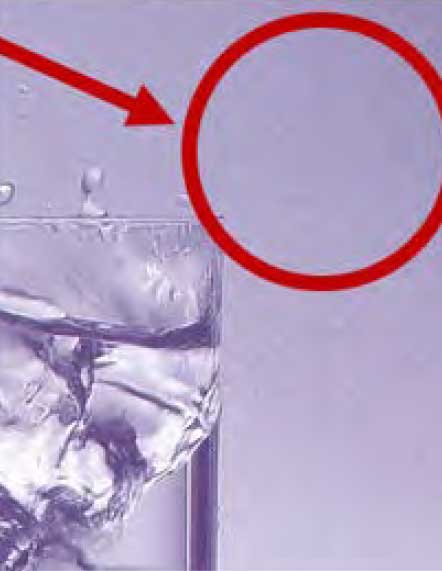 |  |  |
The first printed sample on left is a high-quality coated test liner, and if you take a closer look at the circled area, you see good printing quality. As we move to a lower quality paper (center picture, uncoated kraft liner), you see the same circled area with more mottle, which demonstrates the challenges discussed previously with printing on lower cost paper substrates. The last printing result on the right shows the same picture printed on the same uncoated kraft liner as the competitive plate, but with the DuPont™ Cyrel® ESM plate. As you can see in the circled area, there is even less mottle and the printing quality is higher.
The ability to have lower dot gain, smoother mottle, and higher overall print quality on this lower cost liner helps in creating a sustainable – and more affordable – solution for our customers.
Other benefits of Cyrel® ESM reported by printers are longer press uptime due to the plates staying clean longer, and the ability to print screens that that fade to zero with no visible drop off using HD screening.
Application – Corrugated Pre-Print,
Beverage Carton, Coated Liner 41# (US)
A large corrugated company required plate technology to enhance their ability to fade to zero and improve printing grade level. This could not be done with the current plate technology they were using. ESM .045” plates accomplished this and ran successfully for 375K linear ft x 5 cartons across the web without stopping to clean plates.
Application – Corrugated Pre-Print – Beverage Carton, Uncoated Liner 140g (China)
The printer converted to 100% use of Chinese recycled paper which has shorter fibers than recycled paper in US, which makes it more difficult to achieve high quality print. Additionally, the printer moved from 200g coated paper to 140g uncoated paper. The use of ESM in this scenario led to a 10%+ cost savings, and the user was very satisfied with the color achieved by the plates.
If you too are being challenged to include more sustainable substrates and inks in your flexo print offerings, and would like to do so without compromising quality, contact us to arrange a trial!
Application – Flour Sacks (South Africa)

Three items were printed and submitted to the South Africa FTA print award competition. Two were printed with competitive plates and one was done with 067 ESM. The job printed with ESM won the gold award in South African FTA competition or packaging paper/sacks by the excellent register and minimal dot gain even on the one-color flour image according the judges.
Visit cyrel.com for more information
The Sustainable Platemaker Series
Part 1 - Next Generation Plate Making and the Pursuit of Green
Part 2 - Plate considerations when working with sustainable inks and substrates
Part 3 - Changing the mindset: thinner flexo plates deliver quality and sustainability to the corrugated market
Part 4 - Plates, Plate Packaging and the 5 Rs
Part 5 - Reducing Plate Waste
Part 6 - Plateroom Habits that Affect Sustainability
Part 7 - Improving Plate Longevity and Reuse
Part 8 - Driving Pressroom Sustainability with Prepress Innovation