
Part 8 - Driving Pressroom Sustainability with Prepress Innovation
The flexographic printing industry is constantly changing with new innovations released every year. These innovations range from automated press technology to advanced anilox engravings, to ingenious cleaning devices. However, some of the most integral flexo innovations in the past years have been from prepress and plate suppliers. We have seen these new technologies aid in not only increasing the print quality of flexo, but also increasing the sustainability of this print process. Let’s look at some of the prepress innovations that can help us be more sustainable in the pressroom by reducing ink usage, plate usage and press downtime.
Surface Screening’s Impact on Sustainability
The reduce-reuse-recycle mentality can be both sustainable and profitable when applied to the consumables and components in a manufacturing process. For instance, we have innovations in prepress and plates that can reduce the amount of ink consumed in a print run. Applying a surface screening pattern to your plate makes the print surface act like an anilox. The screening will create a cell-like structure on the plate, which allows it to transfer a more consistent ink film thickness to the substrate. When using an optimized surface screened plate in your press, you can often reduce the anilox volume used and still achieve the same or better ink laydown that is possible with a larger volume anilox and no surface screening.
You can use these innovative screens with process colors, spot colors, and even whites. Whites are typically printed with very high anilox volumes in order to achieve sufficient opacity, which means a large amount of white ink can be consumed during a production run – often much more than any other ink color. If we can reduce the anilox volume used to apply white ink by even a small amount, this can result in major ink savings. Cyrel® has designed very specific surface screening patterns for whites, Cyrel® EASY Brite screens, which can increase opacity and reduce mottle in the white ink laydown, all while using less ink. In addition, a new multidimensional calculation to quantify the print quality of white ink – the Cyrel® EASY Brite Index – can help make communication about white ink print targets much simpler.
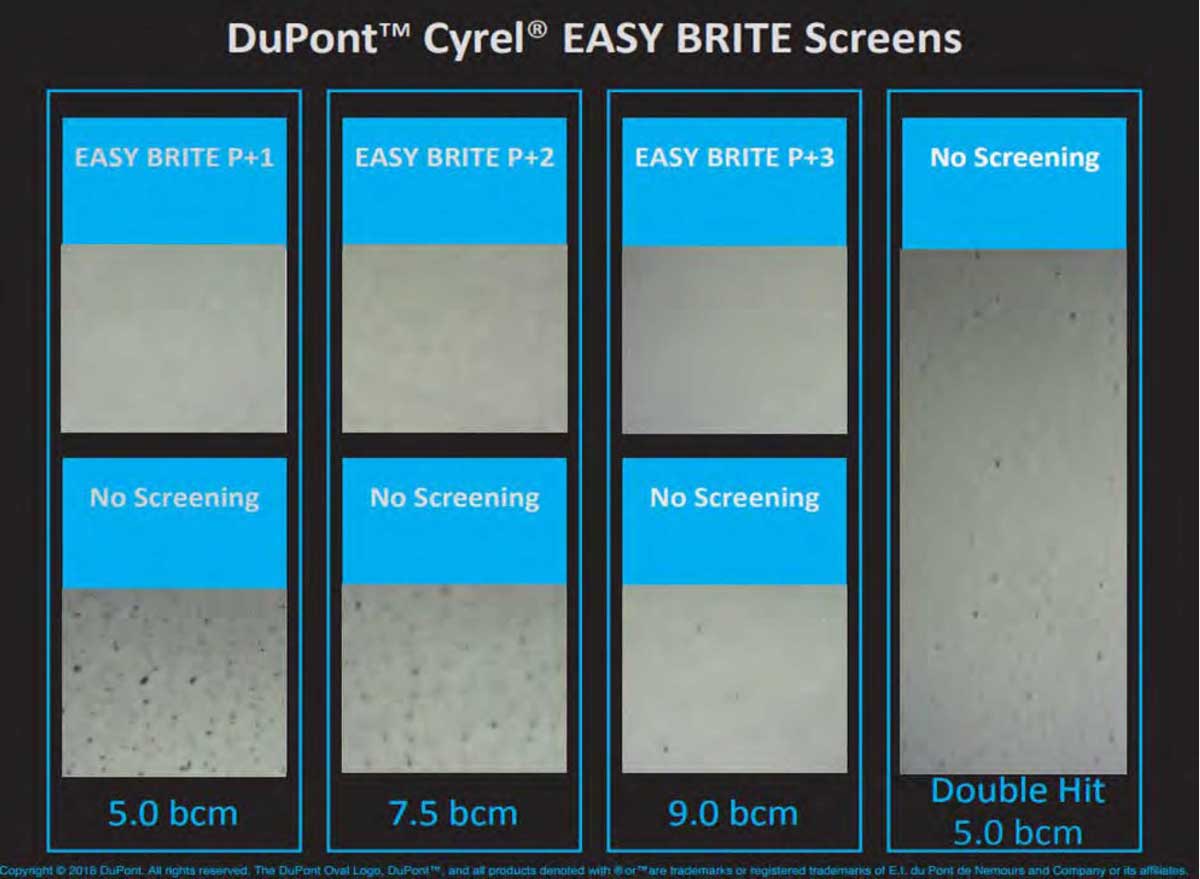
Surface screening technology can also help to reduce the total amount of colors and plates used within a press run. In the past, some product designs required two stations for black: line and screen. The screen black would have a lower volume anilox and only print the black halftone screens in the job, while the line black would be used for text, barcodes and other features that need a bold black which could only be achieved with a larger volume anilox. Now you can use a lower volume anilox with a combo black plate with the help of surface screening. The lower volume anilox allows you to print halftone dots cleanly, while the surface screening helps to print a nice, bold black for text and barcodes.
Printing with expanded gamut 7-color process has also greatly benefited from the use of surface screening. Instead of using a combination of 4-color process and spot colors, you can now accurately reproduce spot colors with this fixed 7-color palette. Surface screening helps to make the already expanded gamut of 7 process colors even larger. And since the same 7 colors are used for every job, there are no ink changeovers required between jobs, eliminating the amount of time and material waste generated by that process.
A common question we are asked at DuPont is, “how long should my plate last?” This is typically answered with, “it depends on how well you treat them.” We find that the most common reasons for replacing plates are due to accidental damage from rough handling or improper press settings. Over-impressing the plate on press is a common way that a plate can be damaged. Press operators may need to overimpress the plate to reduce mottle and achieve good ink laydown. This can exacerbate wear and cause the plate to dirty up with ink, increasing the frequency of having to stop the press and clean the plate. Every time a plate is cleaned on press is an opportunity for damage. It also steals valuable production time and generates substrate waste. Using a plate with an engineered surface or surface screening will help achieve good ink laydown without the need to over-impress and reduce the number of plate remakes required.
Flat Top Dot Plates, Specialty Screening and Prepress Tools
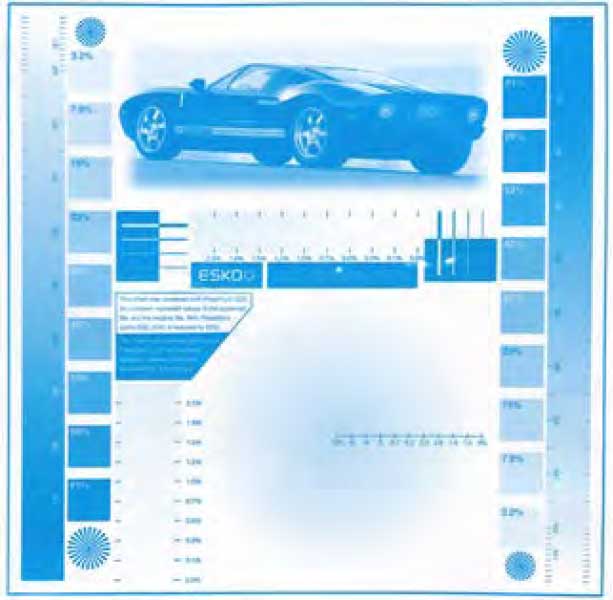
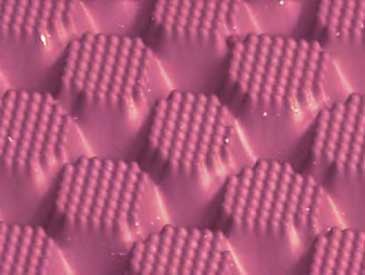
To achieve realistic photographic reproduction, you need to have the ability to print a very high line screen with very fine highlight dot fadeouts, which is not easy to do with flexo. Traditionally, you would need to really push the plate to its limit to hold fine dots, but then these dots wouldn’t last long on press. We now use specialty highlight screens like Crystal Screening from Esko or Bellissima Screening from Hamillroad. These screening innovations utilize the benefits of flat top dot plates, which enable printing extremely fine highlight fades and remarkably clear tones through unique features applied by the software, but without sacrificing plate life. In addition, studies and user experiences have shown reduced ink usage through the use of these screening technologies.
Dirty printing is a common struggle on press that is often blamed on the plate. Many times this print issue is actually a problem with the ink; however, sometimes it is caused by bad prepress. As previously mentioned, with flat top dot plates and new imaging technologies, flexo plates can now hold exceptionally fine features. This is a great benefit for producing small highlight dots, but it also means the plate will hold unwanted scum dots. These are partial or unwanted dots that come either from poor-quality native files or from the RIP process. They will form on the plate but lack stability, so they will end up printing dirty. We now have tools in the RIP process that will remove these unwanted dots to prevent dirty printing. Using these prepress tools will prevent unwanted dots from being in file, thus reducing the chance for dirty printing on press.
UVA LED Plate Exposure and Downstream Benefits

An important key to producing predictable and repeatable high-quality print results is plate consistency, and the flexo plate industry has found that UVA exposure with LEDs is the best way to achieve this. UVA tube exposure units have been the standard since the development of the photopolymer plate, but just like in our daily lives, the future is LED.
The last few years have seen a rapid adoption of UVA LED exposure systems, led by the 2016 introduction of the market-leading Crystal XPS from Esko. At the time of this writing, approximately 500 UVA LED exposure systems are actively making plates around the world, with no sign of demand slowing down. The key benefits of this technology for the plates and the user are:
- Long lifetime of the LEDs (>10x the life of tubes)
- Elimination of the disposal of hazardous mercury contained within UVA tubes
- Consistent UVA output that doesn’t degrade over time, improving plate and print repeatability, and reducing the time and materials spent chasing print targets
- Simultaneous back and main exposure of Crystal XPS improves dot stability for ensuring long life on press and fewer plate remakes
- “Instant on”, requiring no warmup to achieve peak output, leads to more consistent plates and print
When you combine a great printing plate along with these new prepress innovations, you can easily be both more sustainable and more profitable as a flexo printer.
Work with your DuPont™ Cyrel® representative to explore how these prepress innovations can help you reach the sustainability and quality goals of your press room.
The Sustainable Platemaker Series
Part 1 - Next Generation Plate Making and the Pursuit of Green
Part 2 - Plate considerations when working with sustainable inks and substrates
Part 3 - Changing the mindset: thinner flexo plates deliver quality and sustainability to the corrugated market
Part 4 - Plates, Plate Packaging and the 5 Rs
Part 5 - Reducing Plate Waste
Part 6 - Plateroom Habits that Affect Sustainability
Part 7 - Improving Plate Longevity and Reuse
Part 8 - Driving Pressroom Sustainability with Prepress Innovation